
Eco-Theology
Bible Study No. 2 Genesis 2. Humans and Other Creatures
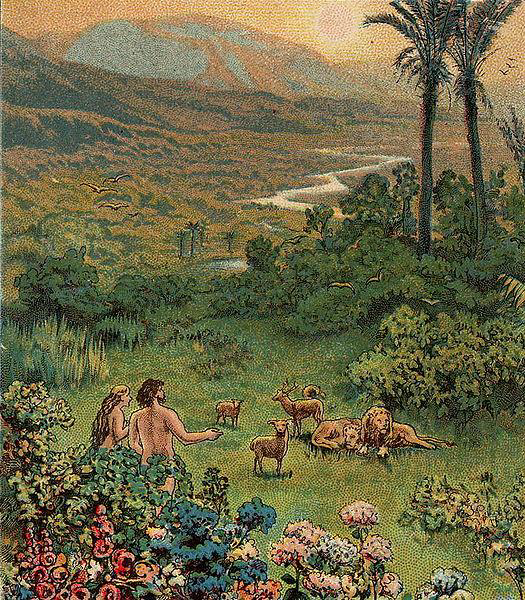
Chapter one of the bible (Genesis 1:1-2:3) presented an overview of God’s creative activity, told inevitably from a human perspective, but without giving humans excessive prominence – our race’s creation got four verses out of thirty-four. The theological message of the chapter concerns the relationships God has designed between all the parts of creation, and between the creation and God’s self. Words usually translated as “have dominion” and “subdue” define humanity’s role. But words acquire meaning from context, practice and experience. God, whose image we bear, had already demonstrated in action the practices of subduing and of exercising dominion, before even creating humanity. Our understanding of that role of ours will be enhanced by chapter 2 whose chief purpose seems to be to flesh out the nature of the relationships that defined creation as “very good” (1:31) when its journey in time began. I used that last phrase because on the other nine occasions that Genesis has the words of v4, “These are the generations of…” they introduce a line of descent from a person who has been under consideration. In a similar way, verse 4 introduces the family history of the created universe. Differing from the ordering of chapter 1, the acts of creation in chapter two begin with a human being, followed by trees and plants, and then animals of all kinds, and finally a second human being offering the first one the potential of a closer partnership than any animal could. Whereas the author has a clear interest in explaining sex and marriage (verse 24), and in preparing for chapter 3’s account of what went wrong with creation (with 2:9 mentioning the tree of knowledge, and 2:25 stating that humans were contentedly naked), our interest just now is in the relationships between the human character and the non-human elements of creation. Verse 7 describes the creation of the human’s body from dust of the ground (as happens subsequently for other animals in v19). The connection between the earth and human is underlined by the overt wordplay in Hebrew where those words are adamah and adam. This body then needs the breath of God to give it life, as did the whole creation (1:2). The ancients lacked our scientific sophistication but observed that all things decayed to dust; our passage is clearly stating that human beings come to exist and continue to live through a combining of that basic raw material of the universe with the spirit of God. Having provided the raw material for our life, the earth then goes on to provide for our aesthetic and culinary delights (v9) and we also have the first references in verse 10 to the resources within the land itself which humans come to value: gold and precious stones. It is self-evident that the water referenced by the whole section about the rivers (v10-14) is also an essential sustainer of our life. As the land thus provides for us, verse 15 then summarises our responsibility towards it: cultivating and conserving. The positive contribution humans are to make to the protection and productivity of earth’s ecosystem is then followed by a limitation on our use of the resources of nature (v16-17). The fruit of one tree among a great variety of them is not for us to eat. The author is shortly to weave a story about the origin of wrong relationships within God’s creation due to human sin, but in this chapter what we note is that humanity was not given carte blanche to exploit creation. Rather, as well as being entrusted with responsibility to care for and conserve creation, we were designed to recognise and abide by limits to our right to use natural resources for ourselves. Both the right and the restriction were declared by God. Our relationship with and respect for God is the determiner of our relationship with the world around us.
Questions to think about or discuss with others
- To what extent do you endorse the claim that Genesis 2 & 3 portrays “the family
history of the heavens and the earth” as verse 4 states, or do you mentally limit it to the early
history of humanity? - Verse 5 suggests that nothing of agricultural value grew on earth initially because there
was no-one to till. Did our hunter-gatherer ancestors, and do contemporary foragers, truly
survive without making any inputs to the land? - In verses 19-20 the human names the other animals. What would you say this implies
about our intended relationship with them? - What would be your list of God-intended restrictions on our use of natural resources
that could be considered symbolised by the prohibition of verse 17?
Stephen Mosedale